Introduction
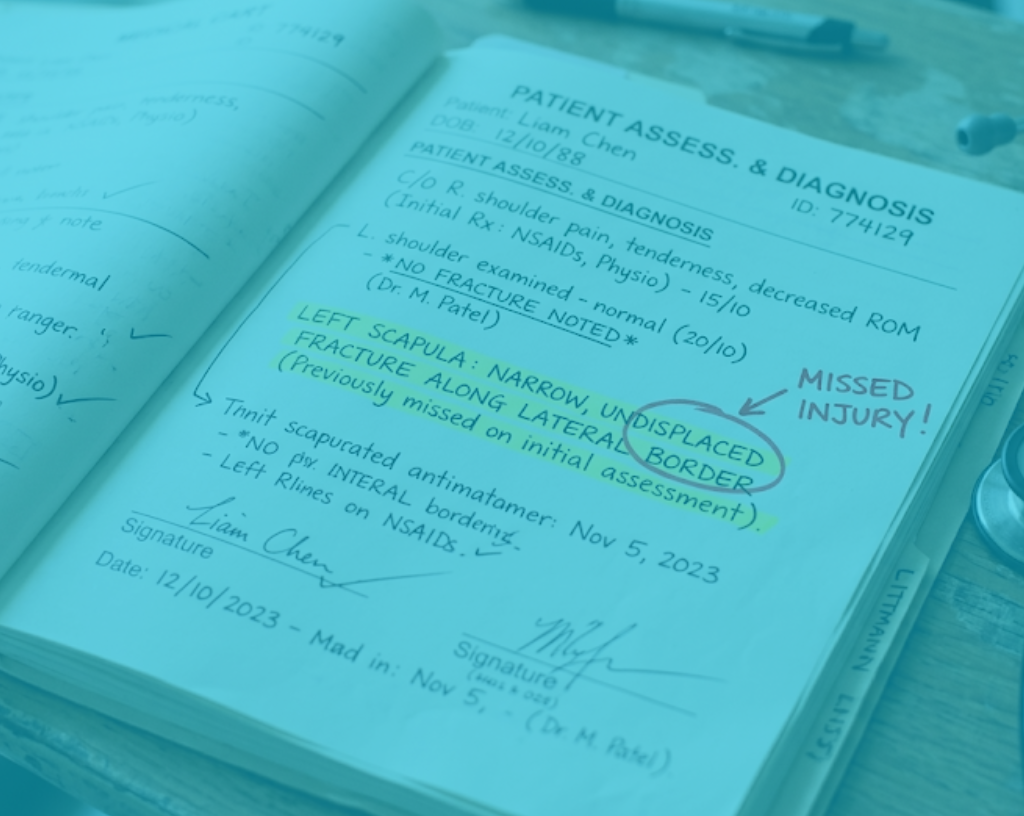
In high volume litigation, critical medical details are often hidden within thousands of pages of records. When cases involve extensive treatment across multiple providers, it becomes increasingly difficult to ensure that every injury, symptom, and diagnosis is properly identified and presented.
Overlooked secondary injuries can significantly impact case valuation. If not identified before mediation, these injuries may be excluded from damages discussions, leading to undervaluation of the claim.
This case study demonstrates how Trivent Legal’s Case Intelligence Platform helped attorneys uncover a previously overlooked secondary injury within a record set exceeding 35,000 pages. By combining structured medical review with intelligent case navigation tools, Trivent Legal enabled counsel to strengthen their position just before mediation.
Background
The case involved an adult plaintiff who sustained injuries following a high impact incident. The initial focus of the case was on primary orthopedic injuries that required immediate treatment, including:
Emergency care
Imaging studies
Specialist consultations
Ongoing therapy
Over time, the medical record expanded significantly, eventually reaching more than 35,000 pages. Records were sourced from multiple hospitals, outpatient providers, diagnostic centers, and rehabilitation facilities.
The legal team had already prepared for mediation based on the primary injuries documented in the case. However, due to the sheer volume of records, not every document had been reviewed in detail.
To ensure completeness before mediation, the attorney engaged Trivent Legal to process the full record set using the Case Intelligence Platform.
Attorney Challenge
The legal team faced several critical challenges:
Extremely high record volume exceeding 35,000 pages
Multiple providers documenting care across different timelines
Risk of missing less prominent diagnoses
Limited time before mediation
Need for a complete and defensible damages presentation
While the primary injuries were well documented, there was uncertainty about whether additional conditions may have been overlooked within the record set.
Trivent Legal’s Expert Intelligence Approach
1. Full Record Ingestion and Structuring
All 35,000+ pages were ingested into the Case Intelligence Platform and organized into a structured dataset.
This included:
Chronological sorting of records
Removal of duplication
Standardization of provider and document formats
Linking of records to specific dates and encounters
This step created a clean and navigable foundation for analysis.
2. Intelligent Medical Record Review
Trivent Legal’s clinical analysts conducted a focused review supported by the platform’s navigation capabilities.
The review targeted:
Diagnoses mentioned outside primary treatment focus
Secondary complaints documented in follow up visits
Imaging findings that may not have been emphasized
Specialist notes referencing additional conditions
This approach allowed analysts to move beyond surface level review.
3. Identification of Secondary Injury
During the review process, the team identified repeated references to symptoms that were not part of the primary injury narrative.
These included:
Neurological complaints documented intermittently
Imaging findings suggesting nerve involvement
Specialist recommendations for further evaluation
These references, while present in the records, had not been consolidated into a clear diagnosis within the case narrative.
4. Correlation and Confirmation
The platform enabled analysts to:
Trace symptom documentation across multiple providers
Link imaging findings to clinical complaints
Identify consistency in symptom reporting over time
This process confirmed that the secondary injury was not incidental but part of the overall injury pattern following the incident.
5. Integration into Case Strategy
Once identified, the secondary injury was incorporated into:
The medical chronology
Case insights within the platform
Pre mediation preparation materials
This ensured that the newly identified condition was fully supported by documentation and ready for presentation.
Key Insights Revealed
The Case Intelligence Platform revealed several critical insights.
First, the secondary injury had been documented across multiple visits but had not been emphasized due to the focus on primary injuries.
Second, imaging findings supported the presence of this additional condition.
Third, symptom progression demonstrated that the secondary injury contributed to ongoing functional limitations.
Finally, the omission of this injury from the initial case narrative would have resulted in an incomplete damages presentation.
Litigation Value Delivered
The identification of the secondary injury provided significant strategic advantages.
Expanded Damages Scope
The case now reflected the full extent of the plaintiff’s injuries.
Stronger Medical Narrative
The injury pattern was more comprehensive and aligned with documented symptoms.
Improved Mediation Position
Attorneys entered mediation with a more complete understanding of the case.
Reduced Risk of Undervaluation
All relevant injuries were accounted for in settlement discussions.
Efficient Record Navigation
The platform allowed attorneys to quickly locate supporting documentation.
Outcome
With the secondary injury identified and integrated into the case, the legal team was able to adjust their mediation strategy accordingly.
The updated case narrative presented a more complete picture of the plaintiff’s condition, including both primary and secondary injuries. This strengthened the attorney’s ability to advocate for appropriate compensation.
Counsel reported that the ability to uncover this injury before mediation prevented a potential undervaluation of the claim and improved overall case positioning.
Conclusion
In large scale cases, critical details can remain hidden within thousands of pages of records. Without structured analysis, secondary injuries may go unnoticed, limiting the effectiveness of litigation strategy.
This case demonstrates how Trivent Legal’s Case Intelligence Platform helps attorneys uncover overlooked medical details, organize complex records, and present a complete case narrative. By combining medical expertise with intelligent technology, Trivent Legal ensures that no critical insight is missed.
When record volume increases, clarity becomes essential. Through Expert Intelligence, Trivent Legal transforms data complexity into actionable insight, empowering attorneys to prepare with confidence and precision.