Introduction
High-value personal injury cases are rarely won through a single piece of evidence or a single legal argument. They are built through meticulous preparation, a clear understanding of the medical story, and the ability to connect complex facts into a compelling case narrative.
As case values increase, so does the complexity of the underlying documentation. Medical records span multiple providers. Treatment progresses over months or years. Diagnostic studies, procedures, specialist evaluations, and future care considerations create layers of information that attorneys must evaluate before making strategic decisions.
Many firms respond by investing in technology. However, not all platforms are designed to support high-value case preparation. Some focus primarily on document storage. Others emphasize search functionality. The most effective solutions help attorneys transform medical records into actionable intelligence.
For plaintiff firms handling complex injury matters, choosing the right intelligence platform can improve medical clarity, reduce review inefficiencies, and support stronger case preparation throughout the litigation lifecycle.
Why High-Value Cases Require a Different Approach
A straightforward soft-tissue injury claim may involve limited treatment and a relatively simple medical history.
High-value cases are different.
They often include:
- Multiple treating providers
- Extensive diagnostic testing
- Surgical procedures
- Long-term therapy
- Future treatment considerations
- Complex causation issues
- Prior medical history
- Multiple volumes of medical records
Attorneys evaluating these matters must answer critical questions:
- How did treatment progress?
- What medical findings support the claimed injuries?
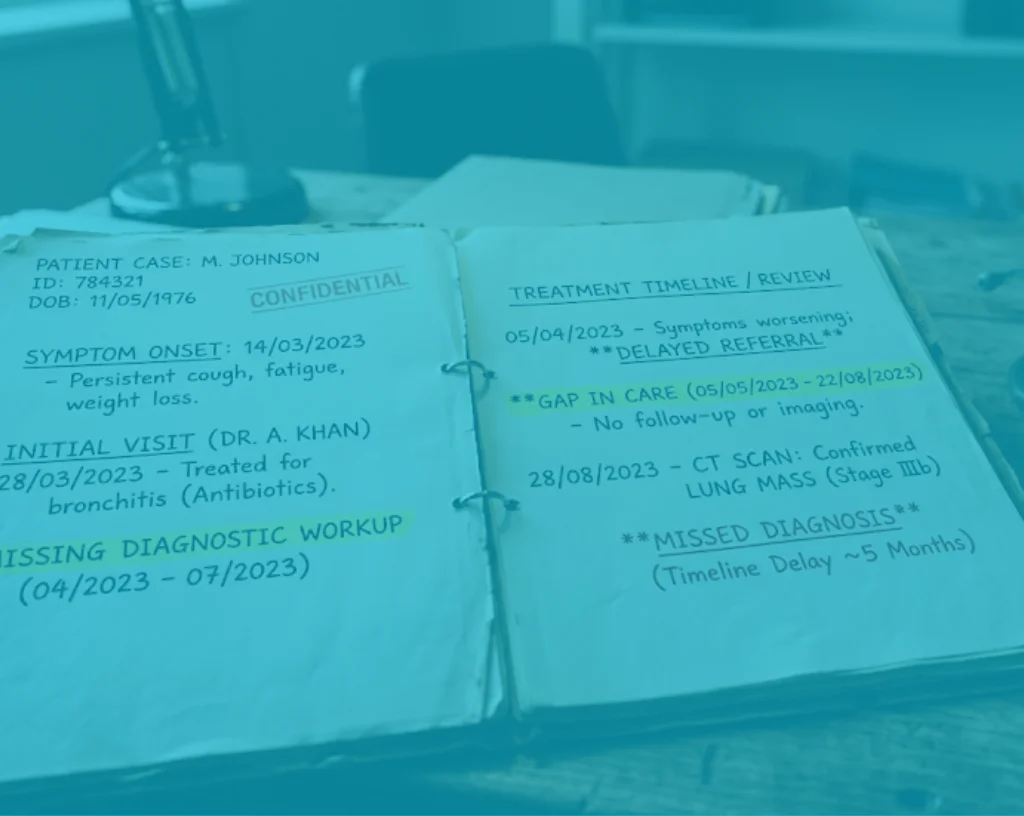
- Are there gaps in treatment?
- What providers contributed to care?
- How do prior conditions affect the case?
- What future medical issues may be relevant?
The larger the case, the more important it becomes to move beyond document management and toward case intelligence.
The Challenge of Information Overload
Most firms do not struggle because they lack records.
They struggle because they have too many records.
A high-value case can easily involve thousands of pages of documentation from:
- Emergency departments
- Orthopedic specialists
- Neurologists
- Physical therapists
- Pain management providers
- Surgeons
- Diagnostic facilities
- Primary care physicians
The problem is not access.
The problem is extracting the medical story from the records efficiently.
Without an organized workflow, attorneys may spend significant time:
- Searching for treatment milestones
- Rebuilding timelines
- Comparing provider notes
- Tracking symptom progression
- Identifying missing records
Every hour spent organizing information is an hour not spent developing strategy.
What Attorneys Need From an Intelligence Platform
An intelligence platform should do more than store documents.
It should help attorneys understand the case.
For high-value matters, the platform should support:
Medical Clarity
Attorneys should be able to quickly understand:
- Injuries
- Diagnoses
- Treatment progression
- Procedures
- Diagnostic findings
Treatment Visibility
The platform should make it easy to follow the medical journey from the initial injury through ongoing care.
Documentation Organization
Information should be structured in a way that supports legal analysis rather than requiring additional interpretation.
Missing Records Identification
Potential documentation gaps should be visible before they affect demand preparation or litigation.
Efficient Collaboration
Attorneys, paralegals, and case managers should be able to work from the same organized information source.
The objective is not simply faster access to records. The objective is faster access to meaningful case intelligence.
Why Medical Documentation Remains the Foundation
Many firms exploring legal technology focus heavily on automation.
Automation can improve efficiency, but high-value cases still depend on accurate medical documentation.
Strong case preparation requires:
- Medical records review
- Medical record summaries
- Medical chronologies
- Treatment progression analysis
- Missing records identification
- Medical issue spotting
Without these foundational elements, even the most advanced platform may provide limited value.
Technology works best when it enhances organized medical documentation rather than replacing it.
The Difference Between Data and Intelligence
One of the biggest mistakes firms make is assuming that access to information is the same as understanding information.
Data tells attorneys:
- What records exist
- What providers treated the plaintiff
- What diagnostics were performed
Intelligence helps attorneys understand:
- Why treatment escalated
- How symptoms evolved
- What findings support damages
- Which records are most important
- What issues may affect case value
High-value cases demand intelligence rather than information alone.
The right platform should help attorneys move from record review to case analysis more efficiently.
Key Features High-Value PI Firms Should Evaluate
When comparing intelligence platforms, firms should look beyond basic document management capabilities.
Structured Medical Documentation
The platform should support:
- Medical record summaries
- Medical chronologies
- Treatment timelines
- Organized provider information
Search and Navigation
Attorneys should be able to locate key facts without reviewing entire record sets.
Medical Insight Visibility
Important findings should be accessible and easy to understand.
Workflow Scalability
The platform should remain effective as case volume and complexity increase.
Attorney Usability
Information should be organized around legal decision-making rather than document storage.
The most valuable platforms help attorneys spend less time locating information and more time evaluating it.
Why High-Value Cases Benefit From Expert Intelligence
Technology alone cannot replace medical understanding.
High-value cases often involve questions such as:
- Did treatment progression support the injury claim?
- Were symptoms consistent across providers?
- How significant are the diagnostic findings?
- What future care considerations exist?
- How should prior medical history be interpreted?
These questions require medical context.
That is why many plaintiff firms are increasingly looking for solutions that combine technology with medically informed documentation.
The goal is not simply AI.
The goal is actionable intelligence built on medical expertise.
How Trivent Legal Helps
Trivent Legal’s Expert Intelligence Solution helps plaintiff firms prepare complex and high-value cases through a combination of expert-built medical documentation and AI-powered platform usability.
Support includes:
- Medical records review
- Medical record summaries
- Medical chronologies
- Narrative summaries
- Missing records identification
- Medical opinions
- Demand-ready medical documentation
Medical experts create the documentation foundation by organizing treatment progression, provider relationships, diagnostic findings, and medically significant events.
AI-powered platform capabilities then enhance usability, navigation, information retrieval, and attorney interaction with case materials.
This approach helps firms develop a clearer understanding of complex medical cases while improving workflow efficiency.
Building Stronger High-Value Cases Starts With Better Intelligence
High-value personal injury cases require more than extensive records and advanced technology.
They require a clear understanding of the medical story.
The right intelligence platform helps attorneys:
- Understand treatment progression
- Evaluate medical evidence
- Identify documentation gaps
- Prepare stronger demands
- Support mediation preparation
- Improve overall case strategy
When medical information is organized, accessible, and supported by expert insight, attorneys can focus on advocacy rather than document management.
That shift often becomes one of the most valuable advantages in complex case preparation.
Frequently Asked Questions
An intelligence platform helps attorneys organize, review, and interact with medical records and case documentation more efficiently. The goal is to transform records into actionable case information.
High-value cases often involve extensive medical documentation and complex treatment histories. Intelligence platforms help attorneys understand the medical story more efficiently.
Firms should evaluate medical documentation support, usability, search functionality, workflow scalability, treatment timeline visibility, and attorney-focused organization.
Medical chronologies help attorneys understand treatment progression, provider relationships, significant medical events, and potential treatment gaps.
AI can improve efficiency and information access, but high-value cases often require medically informed documentation and analysis to support legal decision-making.