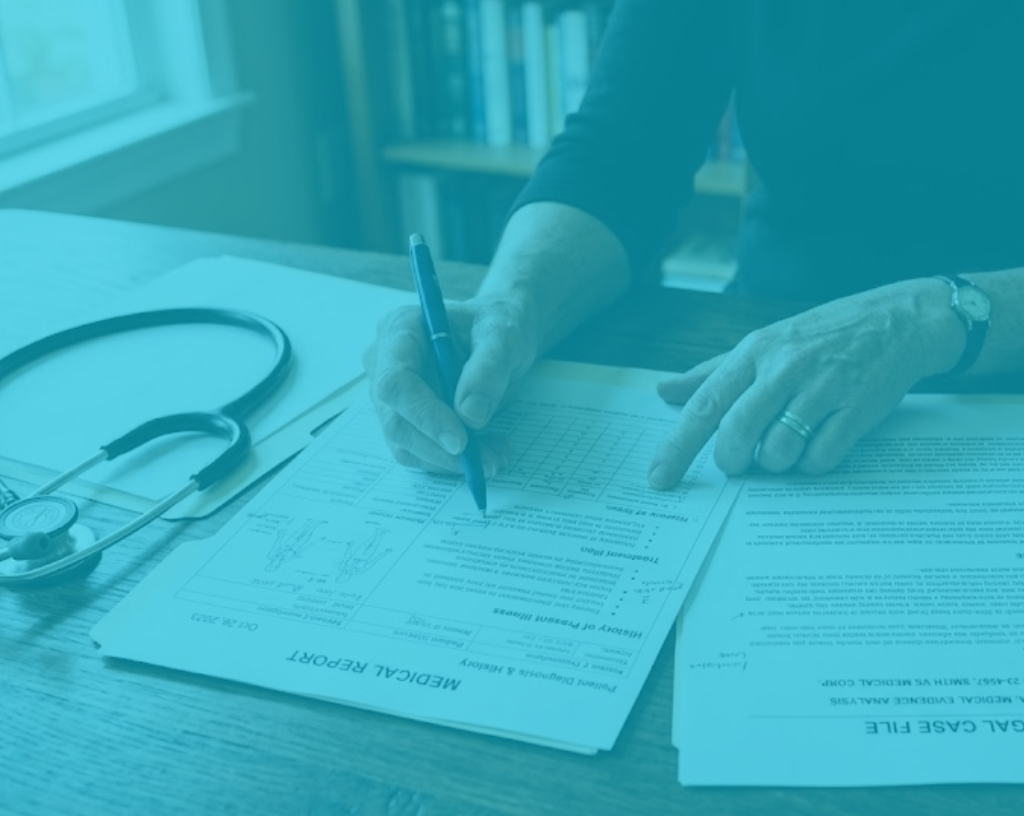
In personal injury litigation, medical events are the foundation of every argument. Each diagnosis, treatment decision, and provider observation contributes to how a case is evaluated, negotiated, and ultimately resolved.
However, medical events alone do not create strategy. The challenge for attorneys is connecting those events into a clear, actionable litigation framework.
Traditional workflows require attorneys to manually interpret records, identify key moments, and build strategy over time. This process is slow, fragmented, and often reactive.
Trivent Legal’s interactive platform, built on an Expert Intelligence framework, allows attorneys to directly connect medical events to case strategy in real time. Instead of interpreting records after the fact, attorneys can actively use structured insights to guide decision making at every stage.
Why Medical Events Are Difficult to Translate Into Strategy
Medical records document events, not strategy. As a result, attorneys often face:
- Disconnected provider notes without clear relationships
- Difficulty identifying which events matter most
- Time intensive manual interpretation
- Delayed recognition of key case turning points
- Challenges in linking medical facts to legal arguments
Without structure, important medical events remain isolated rather than strategically useful.
What an Interactive Platform Changes
Trivent Legal’s platform transforms how attorneys work with medical data by:
- Structuring medical events into organized timelines
- Highlighting key clinical developments
- Allowing real time interaction with case data
- Enabling instant retrieval of relevant information
This allows attorneys to move beyond documentation and into strategy.
1. Turning Medical Events into a Clear Timeline
The first step in connecting events to strategy is understanding when and how they occurred.
The platform allows attorneys to:
- View chronological sequences of medical events
- Identify key milestones in treatment
- Track symptom progression over time
- Understand the relationship between events
This structured timeline forms the foundation of strategic analysis.
2. Identifying High Impact Events Instantly
Not all medical events carry the same weight in litigation.
The platform helps attorneys quickly identify:
- Initial diagnosis and injury documentation
- Key escalation points in treatment
- Specialist involvement
- Surgical or interventional procedures
- Significant provider observations
These high impact events often drive causation and damages arguments.
3. Connecting Events to Causation Strategy
Causation is built by linking the incident to medical outcomes.
With structured case data, attorneys can:
- Align symptom onset with the incident timeline
- Identify supporting medical documentation
- Detect inconsistencies that may weaken causation
- Reinforce continuity of care
This allows attorneys to build causation arguments with greater clarity and precision.
4. Linking Treatment Progression to Damages
Medical events directly influence damages, but only when properly connected.
The platform allows attorneys to:
- Correlate escalation in care with increased costs
- Link ongoing treatment to long term impact
- Demonstrate chronic condition development
- Support both economic and non economic damages
This ensures that damages are grounded in medical evidence.
5. Detecting Risks and Weaknesses Early
Strategic case development requires identifying not only strengths but also vulnerabilities.
The platform helps attorneys detect:
- Treatment gaps
- Conflicting provider opinions
- Delayed care patterns
- Missing documentation
Early identification allows attorneys to address these issues before they affect negotiations or trial.
6. Supporting Real Time Strategic Decision Making
Traditional case strategy often develops gradually as attorneys review records over time.
With an interactive platform, attorneys can:
- Access insights instantly
- Adjust strategy as new information is identified
- Respond to developments in real time
- Make faster, more informed decisions
This creates a more proactive approach to litigation.
7. Improving Deposition and Negotiation Readiness
Connecting medical events to strategy is critical during depositions and negotiations.
Attorneys can:
- Retrieve key events quickly
- Support arguments with precise medical evidence
- Respond to opposing counsel effectively
- Maintain control of the narrative
This improves both preparation and performance.
From Medical Data to Strategic Advantage
Traditionally, attorneys move from:
- Medical records
to - Manual interpretation
to - Strategy development
With Trivent Legal’s platform, the process becomes:
- Structured medical events
to - Instant insights
to - Real time strategy
This shift reduces delays and improves accuracy.
Why This Matters in Complex and High Volume Cases
In cases involving extensive medical records or multiple providers, connecting events manually becomes increasingly difficult.
The platform enables attorneys to:
- Manage complex case data efficiently
- Identify key events quickly
- Maintain consistency across cases
- Scale their practice without losing quality
This creates a significant competitive advantage.
The Expert Intelligence Advantage
Trivent Legal’s platform is built on Expert Intelligence, ensuring that:
- Medical events are structured by medical professionals
- Insights are clinically meaningful
- Attorneys receive reliable, litigation ready information
- AI enhances speed and accessibility
This combination ensures both depth and efficiency in case strategy.
Final Thoughts
Medical events are the building blocks of every personal injury case, but their value depends on how effectively they are connected to strategy.
Trivent Legal’s interactive platform allows attorneys to move beyond static records and actively use medical events to shape litigation strategy in real time.
By transforming data into actionable insights, attorneys can build stronger cases, respond faster, and achieve better outcomes.