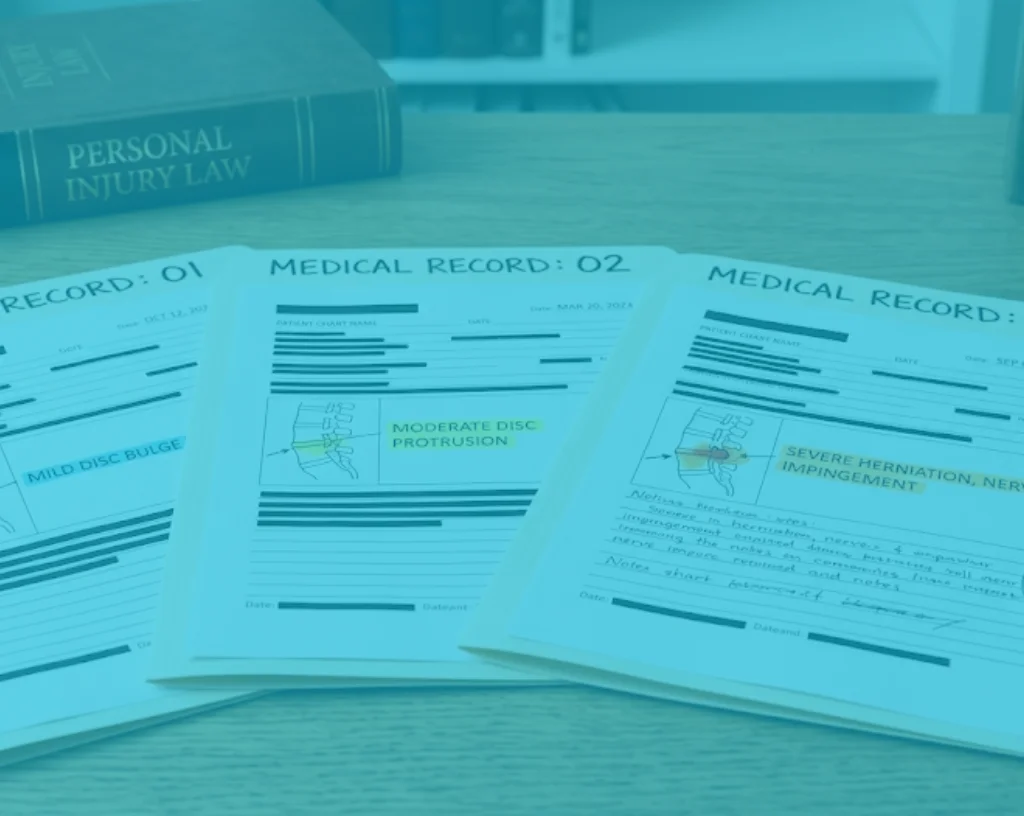
Traumatic brain injury claims are among the most difficult injury cases for attorneys to organize and present effectively. Unlike orthopedic injuries that often appear clearly on imaging, traumatic brain injury symptoms can evolve gradually, appear inconsistently across providers, and become heavily disputed during litigation.
In this case, the plaintiff suffered a traumatic brain injury following a serious accident that resulted in persistent neurological symptoms, cognitive decline, and long-term functional impairment. The attorney faced a major challenge during medical records review because the symptoms were scattered across thousands of pages of records spanning emergency treatment, neurology consultations, neuropsychological evaluations, therapy records, and psychiatric care.
The law firm partnered with Trivent Legal to create a comprehensive narrative summary designed to organize the plaintiff’s neurological progression into one cohesive recovery story supported by detailed medical chronology analysis.
Why Complex TBI Cases Become Difficult to Organize
Traumatic brain injury claims often become difficult to present because symptoms:
- Evolve slowly over time
- Appear inconsistently across providers
- Are documented differently by specialists
- Include subjective complaints
- May not appear clearly on imaging
- Are frequently challenged by insurance carriers
This case involved:
- Cognitive decline
- Persistent headaches
- Dizziness
- Memory loss
- Concentration difficulties
- Emotional and behavioral changes
- Delayed neurological complaints
- Conflicting medical documentation
The attorney needed a way to organize the entire neurological recovery journey into a format that was easy to understand and persuasive during negotiations.
Why the Case Carried Significant Value
The plaintiff’s treatment history extended far beyond initial emergency care and involved multiple specialties, including:
- Neurology consultations
- Neuropsychological evaluations
- Imaging studies
- Cognitive rehabilitation
- Speech therapy
- Pain management
- Psychiatric treatment
The case also contained several high-value indicators, including:
- Reduced executive functioning
- Persistent post-concussion syndrome
- Difficulty returning to work
- Personality changes
- Long-term cognitive deficits
- Permanent neurological impairment
Because traumatic brain injury symptoms often appear gradually, the attorney needed a narrative summary that could clearly demonstrate how the plaintiff’s condition worsened over time.
Why Narrative Summaries Matter in Complex TBI Litigation
One of the biggest challenges in TBI litigation is presenting a clear neurological progression story.
Without proper organization, important details become buried across:
- Emergency room findings
- Neurology follow-ups
- Neuropsychological testing
- Therapy records
- Psychiatric evaluations
- Patient symptom complaints
- Functional limitation documentation
A narrative summary helps attorneys connect these scattered records into one organized recovery narrative supported by detailed medical records review.
Trivent Legal developed a litigation-focused narrative summary that transformed fragmented neurological records into a structured, chronological presentation of symptom evolution and functional decline.
How Trivent Legal Organized the Narrative Summary
1. Tracking Neurological Symptoms Chronologically
The narrative summary organized neurological complaints across the entire treatment timeline, including:
- Initial ER findings
- Early concussion symptoms
- Neurology consultations
- Progressive cognitive complaints
- Therapy participation
- Psychiatric symptoms
- Ongoing functional decline
This chronological organization helped the attorney demonstrate that the symptoms were not isolated or fabricated, but consistently documented across multiple providers over time.
The medical chronology supporting the narrative summary helped identify patterns that may have otherwise been overlooked during medical records review.
Handling complex TBI litigation? Get detailed medical records review now
2. Demonstrating Symptom Consistency Across Providers
One of the most important goals of the narrative summary was establishing consistency between providers.
The summary connected:
- Patient complaints
- Neurology findings
- Neuropsychological testing
- Therapy progress notes
- Functional limitations
- Psychiatric observations
This helped counter common defense arguments claiming the plaintiff’s symptoms were subjective or inconsistently reported.
3. Simplifying Complex Cognitive Treatment History
Traumatic brain injury treatment often becomes difficult to follow because care spans multiple specialties and treatment phases.
The narrative summary simplified the plaintiff’s cognitive treatment progression by organizing:
- Diagnostic evaluations
- Therapy recommendations
- Cognitive rehabilitation
- Speech therapy
- Medication management
- Behavioral treatment
- Functional decline observations
Instead of reviewing disconnected records individually, the attorney could now follow the plaintiff’s recovery journey through one cohesive narrative.
4. Documenting Functional and Emotional Impact
A major component of high-value TBI claims involves demonstrating how neurological symptoms affect daily life.
The narrative summary highlighted:
- Difficulty concentrating
- Memory impairment
- Reduced work capacity
- Emotional instability
- Personality changes
- Loss of independence
- Challenges with routine activities
This helped communicate the real-world impact of the brain injury beyond medical terminology alone.
Need to simplify thousands of pages of neurological records?
How the Narrative Summary Helped Address Litigation Challenges
Traumatic brain injury claims are commonly challenged by defense counsel using arguments such as:
- Symptoms are subjective
- No objective brain injury exists
- Complaints are delayed
- Imaging findings are normal
- Psychological conditions predated the accident
- Reporting is inconsistent
The narrative summary helped the attorney respond to these challenges by:
- Organizing neurological complaints chronologically
- Demonstrating symptom consistency
- Tracking worsening cognitive patterns
- Showing treatment escalation
- Connecting neurological decline to daily limitations
- Supporting causation through organized medical chronology findings
The structured presentation made the plaintiff’s recovery story significantly clearer and more persuasive during negotiations.
How Narrative Summaries Strengthen TBI Case Presentation
Narrative summaries are especially valuable in traumatic brain injury litigation because they transform fragmented medical documentation into understandable case narratives.
In this case, the narrative summary helped organize:
- ER treatment
- Neurology records
- Neuropsychological testing
- Therapy participation
- Cognitive rehabilitation
- Functional decline
- Long-term impairment
By combining detailed medical records review with organized medical chronology support, the attorney gained a far stronger understanding of the plaintiff’s neurological progression.
Trivent Legal’s narrative summaries are designed to help attorneys simplify complex treatment histories while strengthening case presentation and damages narratives.
What Is a Narrative Summary?
For attorneys handling complex injury litigation, understanding what is a narrative summary becomes especially important in cases involving traumatic brain injuries.
A narrative summary is a structured medical and treatment overview that transforms extensive medical records into a clear, chronological story explaining:
- Injury progression
- Treatment history
- Symptom development
- Functional limitations
- Recovery challenges
- Long-term impact
Unlike isolated treatment summaries, a narrative summary connects the entire recovery journey into one cohesive presentation that attorneys can use during negotiations, mediation, and litigation.
This case serves as a strong narrative summary example because it demonstrates how organized storytelling can simplify highly complex neurological treatment records.
Looking for a narrative summary for complex TBI litigation?
The Outcome
With support from Trivent Legal’s narrative summary and medical chronology services, the attorney gained:
- A clear neurological progression story
- Organized cognitive treatment history
- Faster access to critical medical facts
- Better documentation of functional decline
- Stronger symptom consistency presentation
- Improved response to defense causation arguments
- More persuasive long-term impairment presentation
The narrative summary transformed fragmented neurological records into a cohesive recovery narrative that clearly demonstrated the plaintiff’s cognitive decline and long-term neurological impairment.
Conclusion
Complex traumatic brain injury cases often become difficult to litigate because symptoms evolve gradually, appear inconsistently across providers, and are heavily challenged by the defense.
In this case, the narrative summary helped organize emergency findings, neurology consultations, neuropsychological evaluations, therapy records, and cognitive decline into one structured recovery story supported by detailed medical chronology analysis. By simplifying the medical records review process and clearly documenting symptom progression, the attorney was able to present the plaintiff’s neurological impairment with greater clarity, consistency, and impact.
For attorneys handling traumatic brain injury claims, a professionally structured narrative summary can become one of the most valuable tools for organizing cognitive treatment history, demonstrating functional decline, and strengthening settlement positioning.