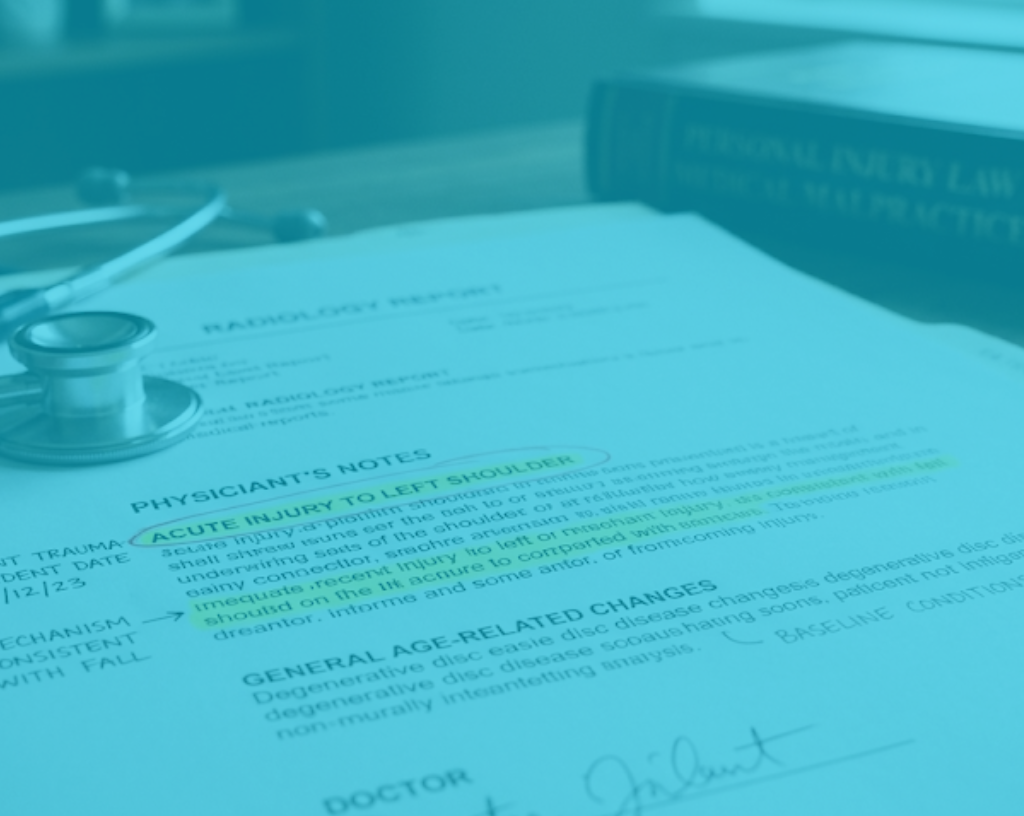
In cases involving older plaintiffs, the age related decline defense is frequently used to minimize damages. Defense counsel often argue that functional limitations, pain, or cognitive changes are the natural result of aging rather than the consequence of an injury. When this argument gains traction, it can significantly reduce settlement value.
This case study illustrates how a physician authored medical opinion from Trivent Legal helped plaintiff’s counsel neutralize the age related decline defense. By distinguishing normal aging from trauma induced impairment, the medical opinion provided clarity on causation and preserved the integrity of the damages claim.
Background
The case involved an older adult plaintiff who sustained injuries in a negligence related incident. Prior to the incident, the plaintiff lived independently, managed daily activities without assistance, and had no documented mobility aids or cognitive impairment affecting function.
Following the incident, the plaintiff experienced:
- Persistent pain
- Reduced mobility
- Difficulty performing daily tasks
- Increased reliance on assistive devices
- Decline in overall functional capacity
While medical records clearly documented post incident limitations, the defense asserted that these changes were consistent with normal aging and pre existing degeneration.
Plaintiff’s counsel recognized that without a clear medical distinction between age related changes and trauma induced impairment, the defense argument could undermine damages. The attorney engaged Trivent Legal to obtain a neutral MD medical opinion focused specifically on causation and impairment differentiation.
Attorney Challenge
The legal team faced several issues:
- Imaging showed degenerative changes common in older adults
- Defense experts emphasized natural progression of arthritis and spinal degeneration
- The plaintiff’s age alone was used to question functional decline
- Pre incident baseline function was not clearly summarized in one document
- Causation required medical precision rather than general statements
The attorney needed an opinion that could clearly explain how aging differs from acute injury impact.
Trivent Legal’s Approach
1. Baseline Functional Assessment
Trivent Legal’s clinical analysts first reviewed records predating the incident to establish baseline function, including:
- Primary care notes
- Activity level documentation
- Mobility assessments
- Absence of assistive devices
- Work and daily living capacity
This created an objective foundation for comparison.
2. Post Incident Clinical Review
Next, the team analyzed post incident records to identify:
- New symptoms and diagnoses
- Imaging findings
- Surgical or procedural interventions
- Therapy progression
- Persistent functional limitations
The chronology clearly separated pre and post incident clinical states.
3. Physician Authored Medical Opinion
A Trivent Legal MD reviewed the complete record set and addressed:
- Whether documented degeneration was symptomatic prior to the incident
- Whether the trauma likely exacerbated or accelerated impairment
- Whether the plaintiff’s decline exceeded expected age related progression
- Whether functional losses were temporally linked to the injury
The opinion was grounded in clinical reasoning and supported by documented evidence.
4. Differentiating Aging From Injury
The MD opinion clarified several key points:
- Degenerative findings on imaging do not equate to functional disability
- Asymptomatic degeneration is common in aging populations
- Sudden functional decline following trauma is not typical of gradual aging
- The plaintiff’s post incident limitations were temporally and clinically consistent with injury
This distinction was critical in reframing the case.
Key Findings
The medical opinion concluded that:
- The plaintiff was functionally independent prior to the incident.
- Age related degeneration was present but not disabling.
- The injury caused a measurable decline beyond expected aging.
- Functional limitations were directly related to trauma.
- The age related decline defense was not supported by the clinical timeline.
These findings provided a medically sound counter to the defense narrative.
Litigation Value Delivered
The MD medical opinion provided several strategic advantages:
Neutralized defense framing
The opinion separated normal aging from trauma related decline.
Strengthened causation
The temporal relationship between injury and impairment was clearly articulated.
Protected damages valuation
Functional loss could not be dismissed as inevitable aging.
Improved expert positioning
The opinion created a foundation for deposition and cross examination strategy.
Enhanced negotiation leverage
Clear medical reasoning reduced the defense’s ability to minimize long term impact.
Outcome
With the physician authored opinion in place, plaintiff’s counsel was able to confidently address the age related decline argument during negotiations. The structured medical analysis prevented the defense from reframing the case as a natural aging progression.
The attorney reported that the opinion shifted the discussion from age to injury, preserving the plaintiff’s damages position and strengthening overall settlement posture.
Conclusion
Age related decline is a common defense in cases involving older plaintiffs. However, degeneration does not equal disability, and aging does not negate injury. This case demonstrates how Trivent Legal’s MD medical opinions provide the clarity needed to distinguish natural progression from trauma induced impairment.
By combining structured record review with physician insight, Trivent Legal equips attorneys to address age based defenses with precision and confidence. When causation is challenged on the basis of age, clinical clarity becomes the most effective rebuttal.