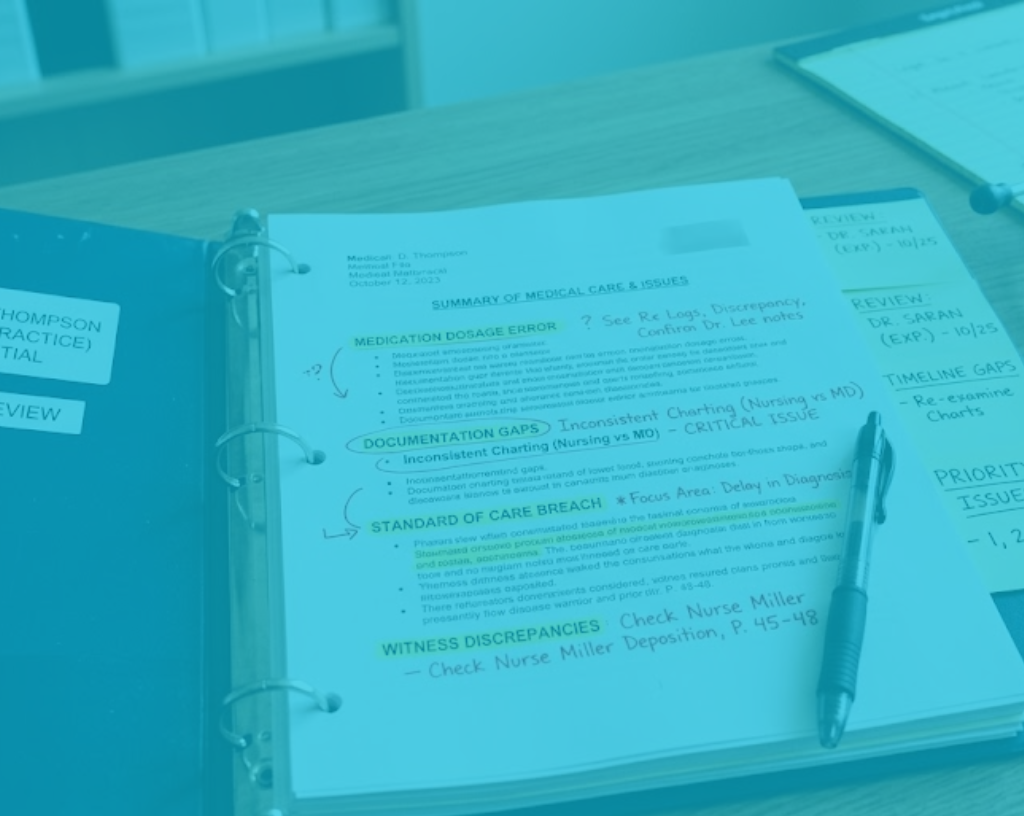
Demand letters are often viewed as a vehicle for settlement negotiation, but experienced attorneys know they serve a more critical function long before numbers are exchanged. A well prepared demand letter acts as a stress test for the case itself. It forces the legal team to confront gaps in medical evidence, inconsistencies in timelines, causation vulnerabilities, and damage exposure that may otherwise surface later under far less favorable circumstances. Trivent Legal helps attorneys use demand letters not just to demand value, but to identify and resolve case weaknesses proactively, strengthening positioning before adjusters, mediators, or defense counsel ever respond.
Why Demand Letters Reveal Case Vulnerabilities
Drafting a demand letter requires translating the entire case into a coherent, defensible narrative. This process often exposes weaknesses that are not obvious during routine file review.
Common vulnerabilities revealed include:
- Incomplete or unclear medical timelines
- Gaps in treatment that lack explanation
- Ambiguous causation between incident and injury
- Conflicting provider opinions or diagnoses
- Missing support for future medical needs
- Undocumented functional or economic impact
Because demand letters must stand on their own, any unsupported assumption quickly becomes visible.
How Medical Chronology Gaps Surface During Demand Preparation
One of the first weaknesses exposed during demand drafting is a fragmented medical timeline. When records are reviewed collectively, attorneys may discover:
- Delays between injury and first treatment
- Inconsistent symptom reporting across providers
- Missing records during critical periods
- Overlapping care without clear escalation rationale
These issues weaken credibility if left unaddressed. Trivent Legal resolves this by creating expert driven medical chronologies that reconcile timelines and explain gaps in clinically appropriate terms.
Identifying Causation Weaknesses Before the Defense Does
Demand letters force attorneys to clearly explain why the defendant’s conduct caused the injury. This often exposes causation issues such as:
- Pre existing conditions not clearly distinguished
- Symptoms that appear delayed or intermittent
- Diagnostic findings that seem inconsistent with complaints
Trivent Legal addresses these weaknesses by incorporating medical expert analysis that explains injury mechanics, symptom progression, and aggravation. This transforms potential causation challenges into supported arguments rather than vulnerabilities.
Exposing Treatment Gaps and Utilization Questions
Treatment gaps are frequently exploited by insurers to argue recovery or lack of severity. During demand preparation, attorneys may recognize:
- Periods without documented care
- Changes in providers or treatment plans
- Interruptions due to insurance or financial issues
A strong demand letter does not ignore these gaps. It explains them. Trivent Legal provides clinical context that clarifies why pauses occurred and why they do not undermine the legitimacy of the injury or claim.
Testing the Strength of Damages Documentation
Demand letters often reveal whether damages are fully supported or merely assumed. Weaknesses commonly include:
- Medical bills without narrative explanation
- Future care mentioned without projection support
- Pain and suffering asserted without clinical context
- Economic loss not clearly tied to medical limitations
Trivent Legal strengthens damage sections by aligning medical findings with functional impact and future exposure, ensuring that claimed damages are defensible rather than aspirational.
Using the Demand Letter as a Pre Litigation Audit Tool
Sophisticated firms treat demand letter preparation as an internal audit. If something cannot be clearly explained in the demand, it will likely be challenged later.
This audit approach allows attorneys to:
- Request missing records early
- Obtain medical opinions where needed
- Refine causation theories
- Adjust valuation expectations realistically
- Decide whether early settlement or litigation is preferable
Demand letters become tools for strategy refinement, not just negotiation.
How Trivent Legal Helps Address Weaknesses Proactively
Trivent Legal supports attorneys by identifying and resolving weaknesses during demand preparation rather than after they are exposed by the defense.
Our process includes:
- Comprehensive medical record review
- Expert driven medical chronologies
- Identification of timeline inconsistencies
- Causation analysis and clarification
- Damage support through MCP and billing summaries
- Attorney ready demand exhibits
This proactive approach allows attorneys to control how weaknesses are framed rather than reacting defensively.
Turning Weaknesses into Controlled Narratives
Not every weakness can be eliminated, but many can be reframed. A delay can become a reasonable clinical progression. A pre existing condition can become an aggravation case. A treatment gap can reflect access issues rather than recovery.
Demand letters allow attorneys to define these narratives first. Trivent Legal helps ensure that explanations are medically sound and strategically positioned.
Why Proactive Weakness Management Improves Outcomes
When weaknesses are addressed early, attorneys benefit from:
- Fewer adjuster objections
- Reduced negotiation friction
- Stronger mediation positioning
- Lower litigation risk
- Improved client trust and confidence
Controlling the narrative early reduces the likelihood of unpleasant surprises later.
Conclusion
Demand letters are not just settlement tools. They are diagnostic instruments that reveal where a case is strong and where it is vulnerable. Attorneys who use demand letters strategically can identify weaknesses early and address them with clarity and confidence. Trivent Legal supports this process by providing expert driven medical analysis that strengthens demand narratives and resolves vulnerabilities before they are exploited. When weaknesses are managed proactively, demand letters become powerful tools for control, credibility, and successful outcomes.