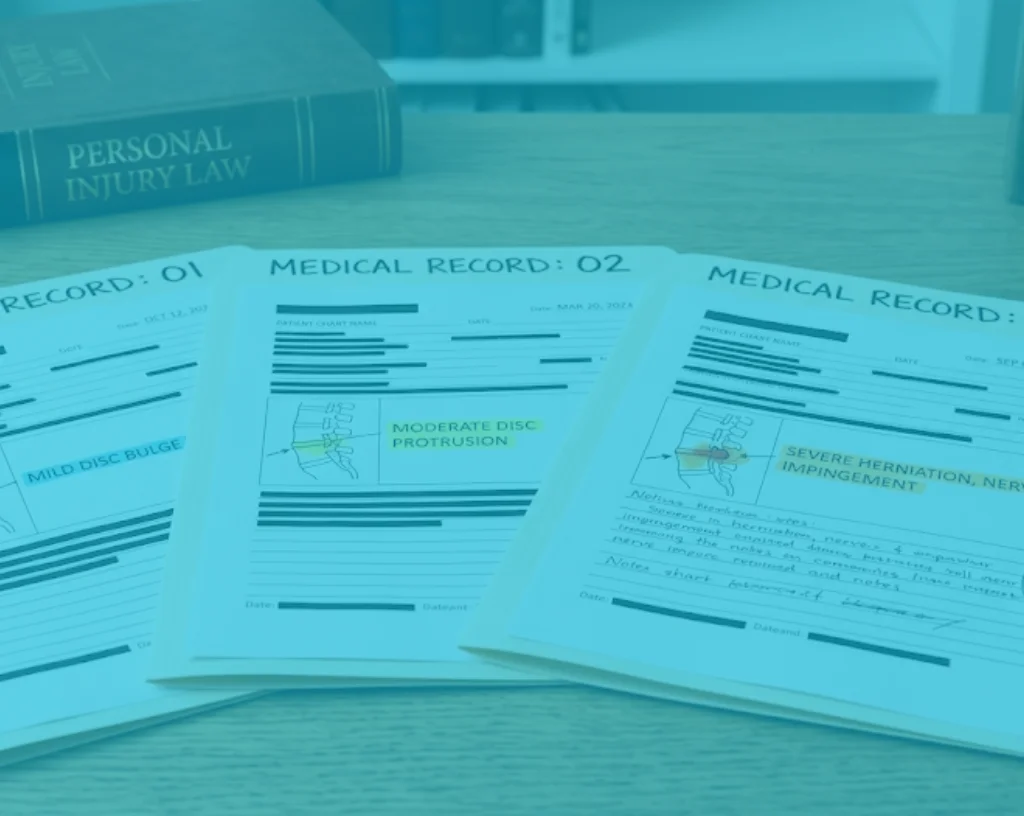
Aggravation injuries are among the most contested issues in personal injury litigation. When a claimant has a pre existing condition, defense counsel often argues that the current symptoms are unrelated to the incident and simply part of the patient’s prior medical history.
For plaintiff attorneys, the challenge is proving that the accident worsened an existing condition, accelerated degeneration, or triggered a significant change in symptoms and treatment.
This is where a structured medical chronology becomes critical. Through detailed medical record review and medical chronology services, attorneys can track the progression of symptoms before and after the incident, identify changes in treatment patterns, and establish how the injury aggravated the claimant’s prior condition.
Why Aggravation Injury Cases Are Difficult to Prove
Unlike new injuries, aggravation injuries involve medical conditions that already existed before the incident.
This creates several challenges:
- Prior complaints may already exist in the medical record
- Defense counsel may attribute symptoms to degeneration
- Treatment history may appear similar before and after the accident
- Symptom progression may develop gradually
Without a structured medical record chronology, it becomes difficult to distinguish baseline health from post incident deterioration.
What a Medical Chronology Reveals in Aggravation Cases
A medical chronology report organizes treatment records into a clear timeline, allowing plaintiff attorneys to compare:
- Pre accident symptoms
- Post accident complaints
- Changes in treatment intensity
- Escalation in provider involvement
- Progression of diagnostic findings
This structured comparison is essential in aggravation injury litigation.
1. Establishing the Baseline Condition Before the Incident
The first step in proving aggravation is identifying the claimant’s medical baseline prior to the event.
Through medical record review for attorneys, chronologies help identify:
- Frequency of prior treatment
- Severity of symptoms before the accident
- Functional limitations documented previously
- Stability of the condition prior to injury
This baseline allows attorneys to demonstrate what changed after the incident occurred.
2. Tracking Changes in Symptoms After the Incident
One of the strongest indicators of aggravation is a measurable change in symptom presentation.
A personal injury medical chronology helps attorneys identify:
- Increased pain severity
- New symptom patterns
- Expanded areas of impairment
- More frequent complaints following the accident
These changes help distinguish aggravation from ordinary progression of a prior condition.
3. Identifying Escalation in Treatment Patterns
Aggravation injuries often result in more aggressive treatment after the incident.
Medical chronologies help attorneys track:
- Increased frequency of medical visits
- Referral to specialists
- Advanced imaging or diagnostic testing
- Escalation from conservative care to interventional treatment
Treatment escalation supports the argument that the condition materially worsened after the accident.
4. Comparing Diagnostic Findings Over Time
In many aggravation injury cases, diagnostic imaging becomes a critical issue.
A structured medical chronology service allows attorneys to compare:
- Prior MRI or CT findings
- Post accident imaging results
- Changes in documented pathology
- New abnormalities following the incident
This chronological comparison strengthens causation arguments.
5. Demonstrating Functional Decline
Aggravation is not limited to pain alone. It often includes worsening functional limitations.
Medical chronologies help identify:
- Reduced mobility after the accident
- Increased work restrictions
- Decline in daily activity tolerance
- Loss of independence or endurance
These functional changes strengthen damages arguments significantly.
6. Detecting Symptom Continuity and Persistence
Defense counsel frequently argues that post accident symptoms are temporary flare ups.
A medical record chronology helps plaintiff attorneys demonstrate:
- Continuous symptom documentation
- Ongoing treatment after the incident
- Lack of meaningful recovery periods
- Persistent need for medical care
This continuity supports long term aggravation claims.
7. Addressing Defense Arguments About Degeneration
One of the most common defense strategies is claiming the condition was entirely degenerative.
Medical chronologies help attorneys counter this by showing:
- Stability of the condition before the accident
- Significant increase in symptoms after the incident
- Escalation in care that did not previously exist
- Objective findings supporting deterioration
Chronological analysis helps separate ordinary degeneration from accident related aggravation.
8. Strengthening Demand Letters and Settlement Negotiations
Aggravation injury cases are often undervalued if the worsening condition is not clearly presented.
Using medical chronology services for law firms, attorneys can:
- Present a structured progression narrative
- Clarify how the incident worsened the condition
- Demonstrate increased treatment burden
- Support higher damages valuation
This improves negotiation leverage significantly.
9. Improving Expert and Deposition Preparation
Aggravation injury cases frequently involve expert testimony.
Medical chronologies help attorneys and experts:
- Understand the timeline of deterioration
- Compare pre and post accident treatment patterns
- Prepare for defense cross examination
- Present a clear medical progression narrative
This improves overall litigation readiness.
Why Medical Chronology Is Essential in Aggravation Injury Litigation
Aggravation injury cases depend heavily on pattern recognition and timeline analysis.
Without structured medical chronology reports, attorneys may struggle to:
- Differentiate pre existing conditions from worsening injuries
- Demonstrate escalation in care
- Establish continuity of symptoms
- Counter degeneration based defenses
Chronologies provide the structure needed to build a persuasive aggravation claim.
The Expert Intelligence Advantage
Trivent Legal’s medical chronology services combine:
- Detailed medical record review
- Structured timeline analysis
- Clinically meaningful treatment progression
- Litigation focused organization
Through Expert Intelligence:
- Medical professionals organize and analyze records
- Attorneys receive litigation ready chronologies
- AI tools improve accessibility and navigation
This allows plaintiff attorneys to identify aggravation patterns with greater precision and efficiency.
Final Thoughts
Aggravation injuries require more than isolated medical records to prove successfully. Attorneys must demonstrate how a pre existing condition changed, worsened, or accelerated after the incident.
Trivent Legal’s medical chronology services help plaintiff attorneys track these changes through structured medical timelines that reveal symptom progression, treatment escalation, and functional decline.
By transforming fragmented records into a clear chronology of aggravation, attorneys can strengthen causation, improve damages presentation, and build more persuasive personal injury cases.