The nationwide litigation over necrotizing enterocolitis (NEC) in premature infants linked to cow’s milk-based baby formulas is growing rapidly. Parents and caregivers allege that manufacturers failed to warn about the risks associated with formulas such as Similac (Abbott) and Enfamil (Mead Johnson), despite studies showing that premature babies fed cow’s milk formulas face a significantly higher risk of NEC than those given human milk.
For attorneys handling these cases, the challenge is not only scientific but evidentiary. Neonatal and pediatric medical records are at the core of every NEC lawsuit. They tell the story of an infant’s birth, feeding regimen, medical complications, and treatment outcomes. When reviewed comprehensively, these records can establish causation, highlight negligence, and provide the foundation for damages claims.
This blog explores the role of neonatal and pediatric record reviews in NEC baby formula lawsuits and how they can strengthen litigation strategies.
The Background: NEC and Baby Formula Litigation
- Necrotizing Enterocolitis (NEC): A severe gastrointestinal disease primarily affecting premature infants. It involves inflammation and tissue death in the intestines, often requiring surgery and carrying a high risk of mortality.
- Litigation Claims: Parents allege that manufacturers marketed cow’s milk-based formulas to hospitals and parents of preterm infants without adequate warnings about NEC risks.
- MDL No. 3026: The NEC baby formula lawsuits were consolidated into an MDL in Illinois, centralizing pretrial proceedings for efficiency.
With hundreds of cases filed, attorneys must demonstrate not just exposure to the product but also the causal link between formula feeding and NEC onset, supported by medical documentation.
Why Neonatal & Pediatric Records Are Essential
1. Feeding History
- Hospital records detail whether the infant received breast milk, formula, or a combination.
- NICU (neonatal intensive care unit) logs often specify brand names, quantities, and timing.
- These entries establish direct product exposure, a key component of liability.
2. Diagnosis of NEC
- Radiology reports confirm the presence of pneumatosis intestinalis, a hallmark of NEC.
- Surgical notes describe bowel resection or perforation repairs.
- Pathology confirms necrotic tissue.
3. Treatment Chronology
- Antibiotic administration, parenteral nutrition, and respiratory support are meticulously documented.
- These details illustrate the severity of the condition and the resources required for care.
4. Long-Term Outcomes
- Pediatric follow-up notes track complications such as short bowel syndrome, developmental delays, and nutritional deficiencies.
- These records form the basis for projecting future damages, including lifelong medical expenses and diminished quality of life.
Building a Strong NEC Case Through Record Review
Step 1: Establishing Exposure
- Extract NICU feeding logs.
- Identify whether the infant was given Similac, Enfamil, or another cow’s milk-based formula.
- Record frequency and duration of formula use.
Step 2: Documenting Onset
- Note the timeline of symptoms (abdominal distension, bloody stools, feeding intolerance).
- Align symptom onset with formula introduction.
- Cross-reference with lab values (acidosis, elevated white blood cells).
Step 3: Confirming NEC Diagnosis
- Gather radiology results showing pneumatosis or perforation.
- Include surgical notes where bowel tissue was resected.
- Add pathology reports confirming necrosis.
Step 4: Quantifying Damages
- Calculate medical expenses from NICU stays, surgeries, and follow-up care.
- Project long-term costs for rehabilitation, special diets, and ongoing pediatric monitoring.
- Document emotional distress and loss of normal childhood development opportunities.
Challenges in Reviewing Neonatal & Pediatric Records
- Volume of Records: NICU patients often generate thousands of pages of documentation in just weeks.
- Complex Terminology: Neonatal medicine involves specialized abbreviations and terms unfamiliar to most attorneys.
- Incomplete Data: Feeding logs may sometimes be missing or inconsistently recorded.
- Overlap of Risk Factors: Prematurity, infections, and birth complications can complicate causation analysis.
Attorneys require expert support to navigate these complexities and extract actionable insights.
Trivent Legal’s Approach to NEC Record Reviews
At Trivent Legal, we combine medical expertise with litigation strategy to provide attorneys with comprehensive neonatal and pediatric record reviews tailored for NEC lawsuits.
Key Deliverables
- Medical Chronologies: Timelines of feeding history, symptom onset, diagnosis, and treatment.
- Causation Reports: Linking formula use to NEC development with medical precision.
- Treatment Summaries: Highlighting hospitalizations, surgeries, and complications.
- Cost Projections: Calculating ongoing medical and rehabilitation expenses.
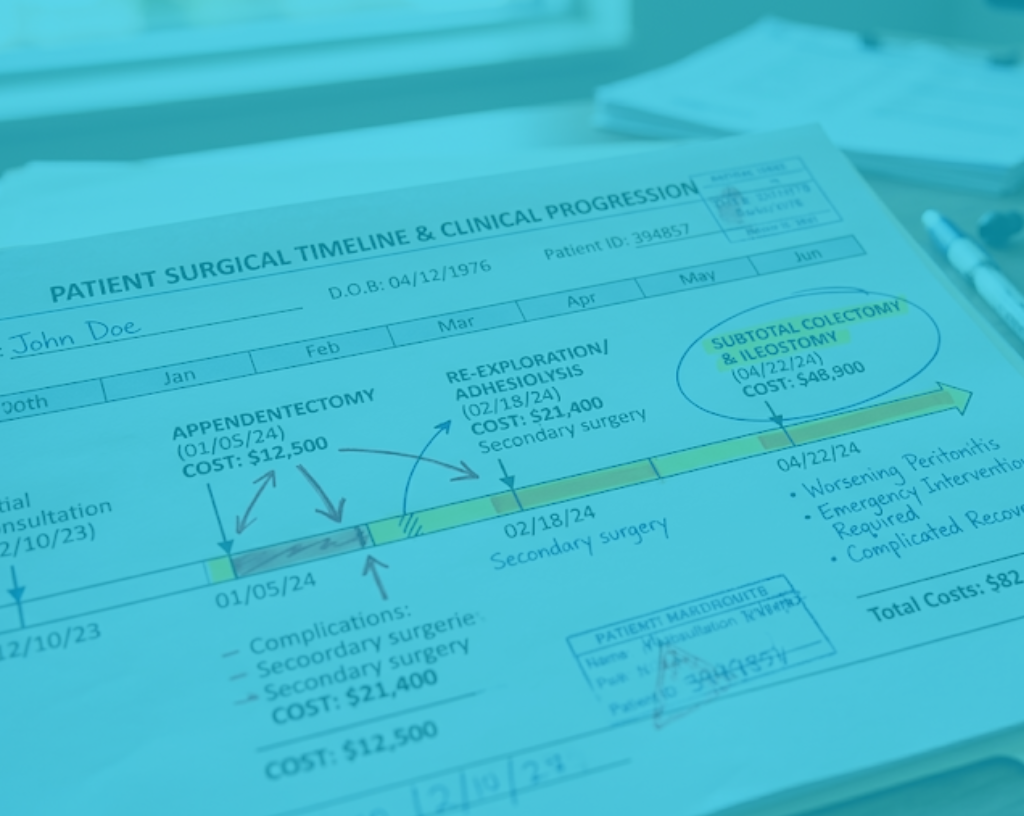
- Visual Exhibits: Infographic timelines, anatomical illustrations of intestinal damage, and charts of care progression.
Our Process
- Collect NICU, neonatal, and pediatric records.
- Extract feeding logs and brand-specific formula usage.
- Correlate clinical findings with NEC symptoms.
- Validate findings with physician review.
- Deliver attorney-ready summaries designed for discovery, depositions, settlement negotiations, and trial exhibits.
Case Hypothetical: NEC in a Preterm Infant
The baby was born at 28 weeks gestation and started feeding on Similac formula within 48 hours. By day 10, developed abdominal swelling, bloody stools, and lethargy. Radiology test confirmed pneumatosis requiring surgical intervention. Further treatment included a two-month NICU stay and parenteral nutrition. Following this the baby was diagnosed with short bowel syndrome, requiring lifelong dietary management. To prove the direct causation between the baby formula and the diagnosis we reviewed and documented:
- Feeding logs confirmed consistent formula use.
- Medical notes established temporal connection between formula feeding and NEC onset.
- Surgical and pathology records confirmed extensive intestinal necrosis.
- Pediatric follow-ups highlighted long-term disability and financial burden.
Why State Juries Respond to NEC Evidence
- Clarity: Chronologies and summaries simplify complex neonatal records.
- Compassion: Highlighting infant suffering and long-term disability connects with jurors emotionally.
- Credibility: Physician-reviewed summaries add scientific rigor.
- Economic Proof: Cost projections quantify the immense financial burden on families.
In NEC trials, juries confronted with clear, emotionally resonant medical narratives have awarded substantial verdicts.
Strategic Value for Attorneys
- Settlement Leverage: Well-documented neonatal summaries encourage defendants to settle earlier and at higher values.
- Trial Strength: Visual aids and clear chronologies help juries understand neonatal medicine.
- Multi-Plaintiff Consistency: Standardized record reviews strengthen MDL efficiency and case consistency.
- Expert Preparation: Oncologists, neonatologists, and pediatricians can build testimony more effectively when supported by structured summaries.
Trivent Legal’s Unique Advantage
Unlike generic record review services, Trivent Legal emphasizes:
- Expert-Led Analysis: Physician-reviewed neonatal chronologies.
- AI + Expert Hybrid: Automation accelerates review, while human oversight ensures accuracy.
- Customization: Tailored summaries depending on whether attorneys need discovery support, mediation leverage, or trial exhibits.
- Speed: Rapid turnaround even for voluminous NICU cases.
- Client-Centric Focus: Clear communication for attorneys, families, and experts alike.
Conclusion
The NEC baby formula lawsuits are shaping into one of the most consequential litigations in pediatric injury law. At the center of these cases are the neonatal and pediatric records that capture an infant’s fragile beginnings, the devastating onset of NEC, and the lifelong consequences that follow.
By transforming dense medical records into compelling, litigation-ready narratives, attorneys can prove product exposure, establish causation, and demonstrate damages with clarity and credibility.
At Trivent Legal, we specialize in helping law firms build these strong cases. Our neonatal and pediatric record reviews give attorneys the tools they need to hold manufacturers accountable, secure justice for families, and obtain the compensation children will need throughout their lives.
Frequently Asked Questions
Neonatal records link premature infant feeding history with necrotizing enterocolitis diagnosis.